
Encephalartos trispinosus: The Stunning South African Cycad for Your Garden
Encephalartos trispinosus, commonly known as the Bushman’s River cycad, is a rare and captivating species native to the Eastern Cape of South Africa. This slow-growing, resilient cycad makes a remarkable and elegant garden specimen, appreciated for its striking bluish-grey foliage and unique, spiny lobed leaflets. Ideal for subtropical and warm temperate climates, E. trispinosus thrives both in full sun and partial shade, making it a versatile addition to rockeries, desert gardens, and container plantings.
Origin and Natural Habitat
Encephalartos trispinosus is endemic to South Africa, specifically flourishing in the valleys of the Bushman’s and Great Fish Rivers within the districts of Bathurst, Alexandria, and Albany in the Eastern Cape. It grows naturally in arid, low succulent shrubland environments, often on rocky ridges and slopes. The climate in its native habitat presents hot summers and cold winters, with occasional light frost, showing the plant’s remarkable cold tolerance for a cycad. It receives annual rainfall mainly concentrated in summer, ranging between 600 and 725 mm, which supports its growth in otherwise dry conditions.
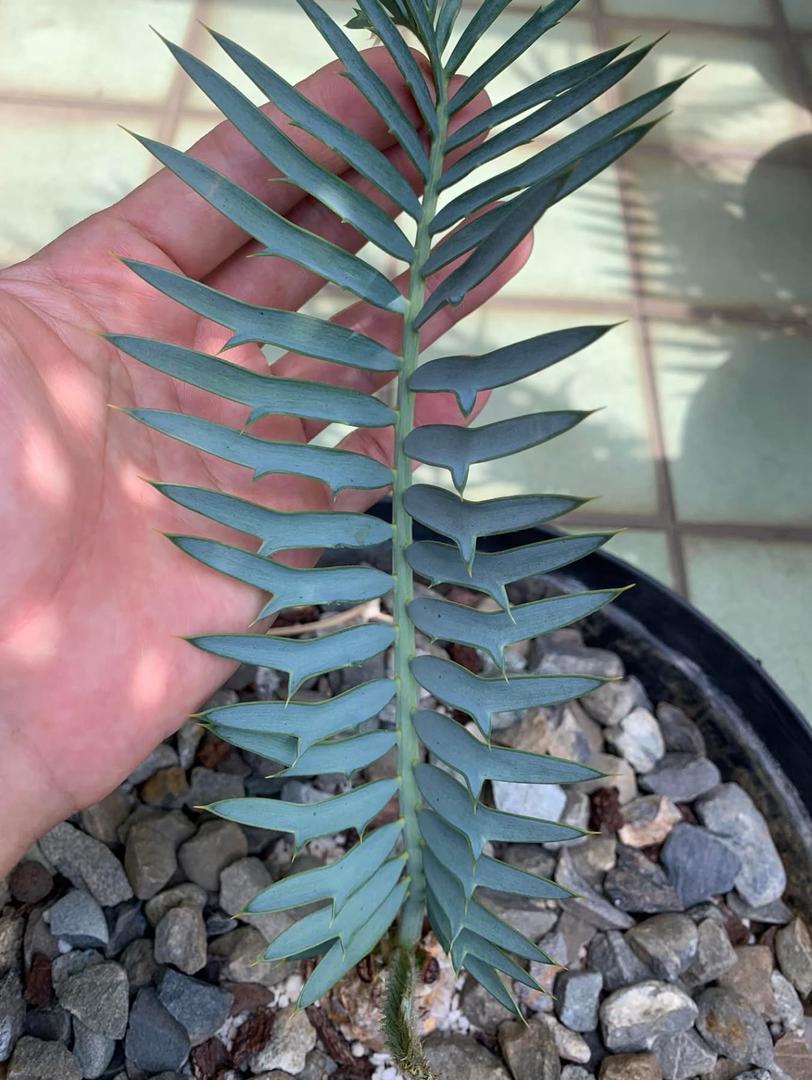
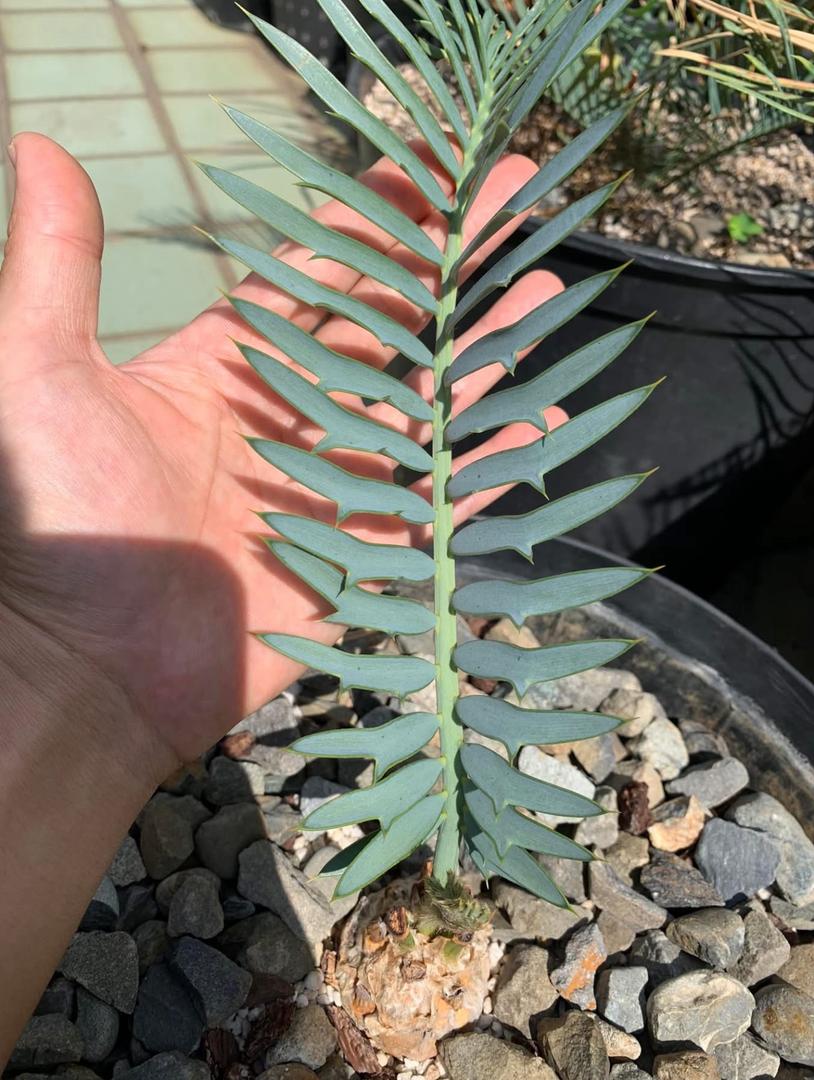
The species often grows among rocks in full sun or shaded by dense thickets of spiny vegetation, highlighting its adaptability. The name “trispinosus” refers to the distinctive three-spined lobes found on each leaflet, a key identifying characteristic of this plant.
Physical Description
E. trispinosus is a relatively slow-growing cycad that can live for many decades if properly cared for. The plant typically features erect or sometimes reclining stems reaching up to 1 to 1.2 meters tall, often with several suckers emerging at the base, allowing it to form attractive clumps over time.
The leaves range from 75 to 125 cm long, with petioles (leaf stalks) of 15 to 22 cm, and display a beautiful glaucous grey-green to bluish-grey color that matures into a greener shade. Each leaf’s median leaflets measure 10 to 18 cm long and 1.5 to 2.5 cm wide. They are characteristically stiff and usually recurved with leaflet edges sporting sharp spines at the tips of their lobes, giving this species a rugged, spiny appearance. The plant produces bright yellow cones during its reproductive phase, with male cones measuring 25-35 cm by 7-8 cm, and female cones being notably larger, reaching up to 40-50 cm by 18-20 cm.
Cultivation and Care Tips
Encephalartos trispinosus is a hardy, adaptable species well suited to garden cultivation in warm temperate to subtropical climates. It enjoys full sun but can tolerate partial shade, with its foliage color often enhanced by bright sunlight without risking leaf burn.
Soil Requirements
This cycad prefers well-draining, deep, fertile soils that are slightly acidic and enriched with organic compost. Good drainage is essential to prevent root rot, especially since the plant can be susceptible to fungal diseases if kept too wet. Heavy or clay soils benefit from mounding to improve drainage. A mixture of sandy soil with mineral components is ideal for mimicking its natural habitat.
Watering
While E. trispinosus is partially drought-tolerant once established, it thrives with regular watering, especially during dry seasons. Adequate moisture promotes optimal growth, but the soil should be allowed to dry out somewhat between watering to avoid waterlogging. It is important to reduce watering substantially in winter, particularly in cooler climates.
Temperature and Sunlight
This species tolerates light frost for short periods and can survive in temperatures around 10°C (50°F) in dry winters. However, heavy frost is likely fatal. The plant does best in climates where it can receive full, direct sun to partial shade. Its ability to withstand wind and some salt spray also makes it suitable for coastal gardens.
Fertilization
E. trispinosus is naturally undemanding but benefits from regular feeding with a balanced fertilizer containing nitrogen, phosphorus, potassium, and trace elements. An annual application of well-matured compost in autumn or early spring can improve soil nutrients and plant health. Using a fertilizer with an even NPK ratio along with organic and mineral supplements yields the best results for steady growth and cone production.Encephalartos trispinosus
Propagation
Propagation of Encephalartos trispinosus is most commonly done by seed or division of suckers.
-
Seed Propagation: Seeds should be hand-pollinated to ensure true-to-type plants, harvesting pollen from male cones to pollinate female cones. Seeds are sown in spring on a bed of clean, coarse sand maintained at 25-28°C. Germination takes about two months, producing radicles first. Seedlings develop slowly and should be repotted after about 10 months into well-drained soil. They require light watering until established.
-
Suckers: Mature suckers around 25 cm in diameter can be carefully removed from the mother plant, usually in early spring. Leaves on suckers are trimmed off, and the wound is allowed to dry for two weeks before planting the sucker in clean sand to encourage root development. Once rooted, the suckers can be transplanted.Encephalartos trispinosus
Pests and Potential Problems
While generally robust, E. trispinosus can face threats from:
-
Scale insects and mealybugs hiding under leaves, controllable by systemic insecticides.
-
Snout beetles that damage seeds, which require contact insecticides for prevention.
-
Mites that sometimes attack new leaves; spraying emerging foliage every two weeks helps protect against them.Encephalartos trispinosus
Landscape Uses and Companions
E. trispinosus stands out as a striking accent plant in gardens, rockeries, and container displays. Its blue-grey foliage provides an eye-catching contrast to green leafy plants. It pairs excellently with low-growing, drought-tolerant succulents such as Aloe arborescens, Carpobrotus, and Arctotis. The cycad’s ability to thrive in hot, arid conditions yet tolerate light frost makes it a valuable asset for xeriscapes and dry gardens.Encephalartos trispinosus
Conservation Status
This species is threatened by illegal collection from the wild due to its rarity and demand among collectors. Cultivation and propagation efforts in botanical gardens and nurseries help reduce pressure on wild populations, promoting sustainability and conservation.
Encephalartos trispinosus offers a unique blend of rugged beauty and challenging cultivation that rewards patient gardeners with decades of striking foliage and intriguing cones. Its adaptation to tough climates, combined with its aesthetic appeal, establishes it as a prized cycad for enthusiasts and landscape designers alike.Encephalartos trispinosus
For those looking to add a distinctive, enduring, and relatively low-maintenance architectural plant to their garden, Encephalartos trispinosus fulfills these criteria with grace and resilience, deserving a place in any collection of classic cycads or xerophytic plants.
By following the care guidelines on watering, soil, sunlight, and pest management, and paying attention to its slow growth and propagation needs, gardeners can enjoy the true elegance of this beautiful South African cycad for many years to come.Encephalartos trispinosus

Reviews
There are no reviews yet.