


Encephalartos Nubimontanus Seeds: Guide to the Blue Cycad
Encephalartos nubimontanus seeds offer collectors a chance to grow one of South Africa’s rarest blue-leaved cycads, known as the Cloud Mountain or Blue Cycad, famous for its fast growth and striking silvery-blue foliage. This extinct-in-the-wild species produces ovoid seeds with orange-red sarcotesta from light blue-green female cones, thriving in cultivation with proper care. Its appeal lies in vigorous growth and adaptability, making these seeds ideal for gardens and collections.
Overview of Encephalartos Nubimontanus
Encephalartos nubimontanus hails from Limpopo Province, South Africa, where it grew on misty mountain slopes before illegal collecting drove it to extinction in the wild. Plants develop a single stem up to 2.5 meters tall and 35-40 cm thick, often with basal offsets forming clusters. Leaves form a rosette 1-1.4 meters long, featuring 110-140 cm arching fronds with stiff, keeled, silvery-blue leaflets that overlap upwards, lightly toothed on margins.
This dioecious cycad stands out as the fastest-growing blue-leaved African species in the Eugene-maraisii complex, more vigorous than relatives like E. maraisii. Male cones number 2-5, narrowly ovoid and bluish-green at 25-40 cm long; females bear 1-3 ovoid cones, 30-40 cm long turning brownish. Seeds measure 25-38 mm long by 23-30 mm wide, dispersed by birds, rodents, and bats after eating the fleshy coat.
Encephalartos Nubimontanus Seeds Characteristics
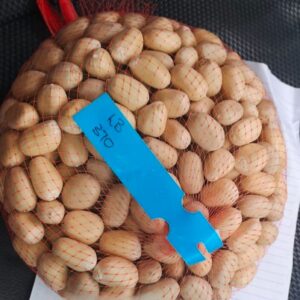
Seeds of Encephalartos nubimontanus are roughly ovoid with a vibrant orange-red sarcotesta that ripens in winter, attracting animal dispersers while protecting the hard sclerotesta inside. Fresh seeds show high germination rates but lose viability quickly in storage, demanding prompt sowing. Their size and color distinguish them from smaller kin like E. lehmannii seeds.
The embryo requires scarification to break dormancy, with pollination in habitat by beetles and bees—hand-pollination in cultivation ensures seed production. Cones emit scents and heat to lure insects, maturing from early summer (November-December).
Conservation Status
Classified as Critically Endangered and extinct in habitat, Encephalartos nubimontanus survives solely through cultivation due to poaching for ornamental demand. CITES Appendix I listing mandates permits for trade, banning wild collection under South African law. Propagation from cultivated stock supports potential reintroduction, with nurseries preserving genetic diversity.
Germinating Encephalartos Nubimontanus Seeds
Seed Preparation
Harvest fresh seeds post-cone maturity; soak 24-48 hours to loosen sarcotesta, then remove flesh carefully to avoid embryo damage. Treat with fungicide like Captan or 10% bleach dip, rinsing thoroughly. Scarify sclerotesta lightly with sandpaper for better water uptake.
Sowing Medium and Conditions
Use sterile 1:1 perlite-pumice or sand mix in 10 cm pots. Sow 1 cm deep, horizontally; cover with plastic for 80-90% humidity. Provide bottom heat at 25-30°C, bright indirect light, and mist to keep moist without waterlogging. Germination occurs in 4-10 weeks.
Troubleshooting Germination
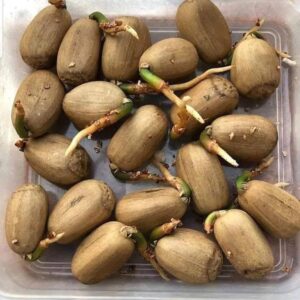
Damping-off fungi threaten seedlings—apply fungicide preemptively. Low rates signal old seeds; aim for 70-85% success with fresh stock. Radicles emerge first, followed by cotyledons and woolly juvenile leaves.
Seedling and Mature Plant Care
Seedlings need high humidity for 6-12 months, transitioning to lower levels with diluted, low-nitrogen fertilizer every 4 weeks. Repot yearly into gritty, well-draining soil (pH 6.5-7.5); by year 2, blue leaves emerge at 20-30 cm. Mature plants tolerate full sun, wetter conditions, and -5°C frost once established.
Water deeply but infrequently, mimicking rocky habitats. Pests like scale respond to neem oil. Coning starts after 8-15 years, with offsets for vegetative propagation.
Buying Encephalartos Nubimontanus Seeds Legally
Source seeds ethically to aid conservation:
-
NPC Cycads Farm or similar South African nurseries: CITES-certified seeds with germination advice, $40-150 per lot.
-
Guildford Cycads (Australia): High-quality stock for global collectors, verified legal provenance.
-
Jungle Music Nursery (USA): Offers propagated seeds/plants, emphasizing extinction prevention.
-
Cycad Gardens (Australia): Blue-fronded specimens and seeds from cultivated parents.
Verify permits, avoid unverified marketplaces. Ethical purchases sustain propagation programs.
Cultivation in Gardens
Encephalartos nubimontanus shines in xeriscapes, rockeries, or conservatories, clustering offsets for density. Pair with succulents in Mediterranean climates; its vigor suits larger spaces, reaching 2-4 m trunks. Hardy and striking, it offsets slowly for prehistoric drama.
Propagation Alternatives
Offsets from base clusters root readily in humid sand-perlite. Root cuttings or tissue culture boost numbers experimentally. Hand-pollination yields superior seeds.
Challenges and Solutions
Overwatering causes rot—ensure drainage. Nutrient excess burns blue leaves; use cycad-specific feeds. Monitor for mealybugs with systemic treatments.
Grow Encephalartos nubimontanus seeds for a rare, resilient blue cycad that rewards with beauty and growth speed, supporting global conservation.

Reviews
There are no reviews yet.