
Encephalartos E.Horridus
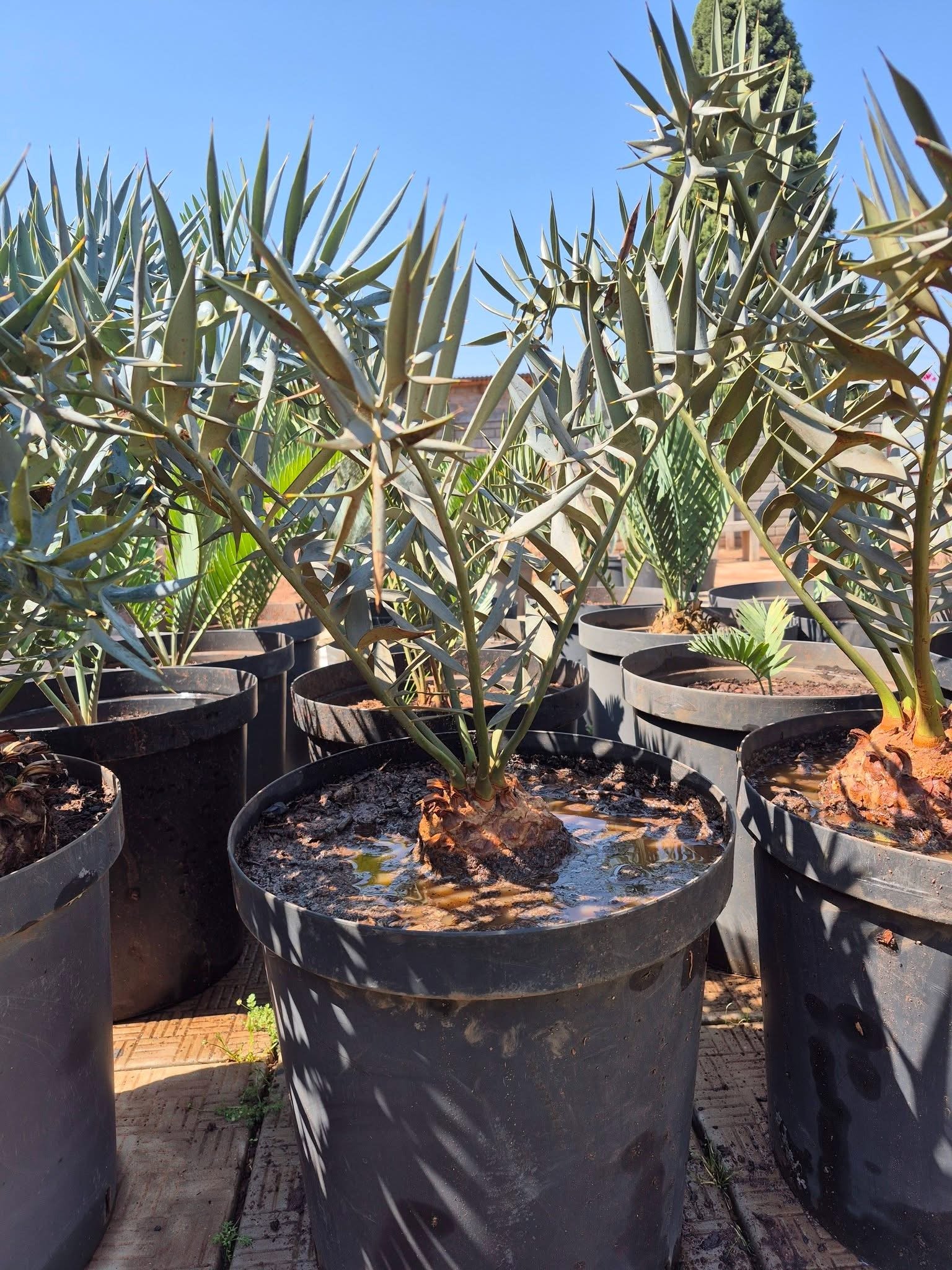
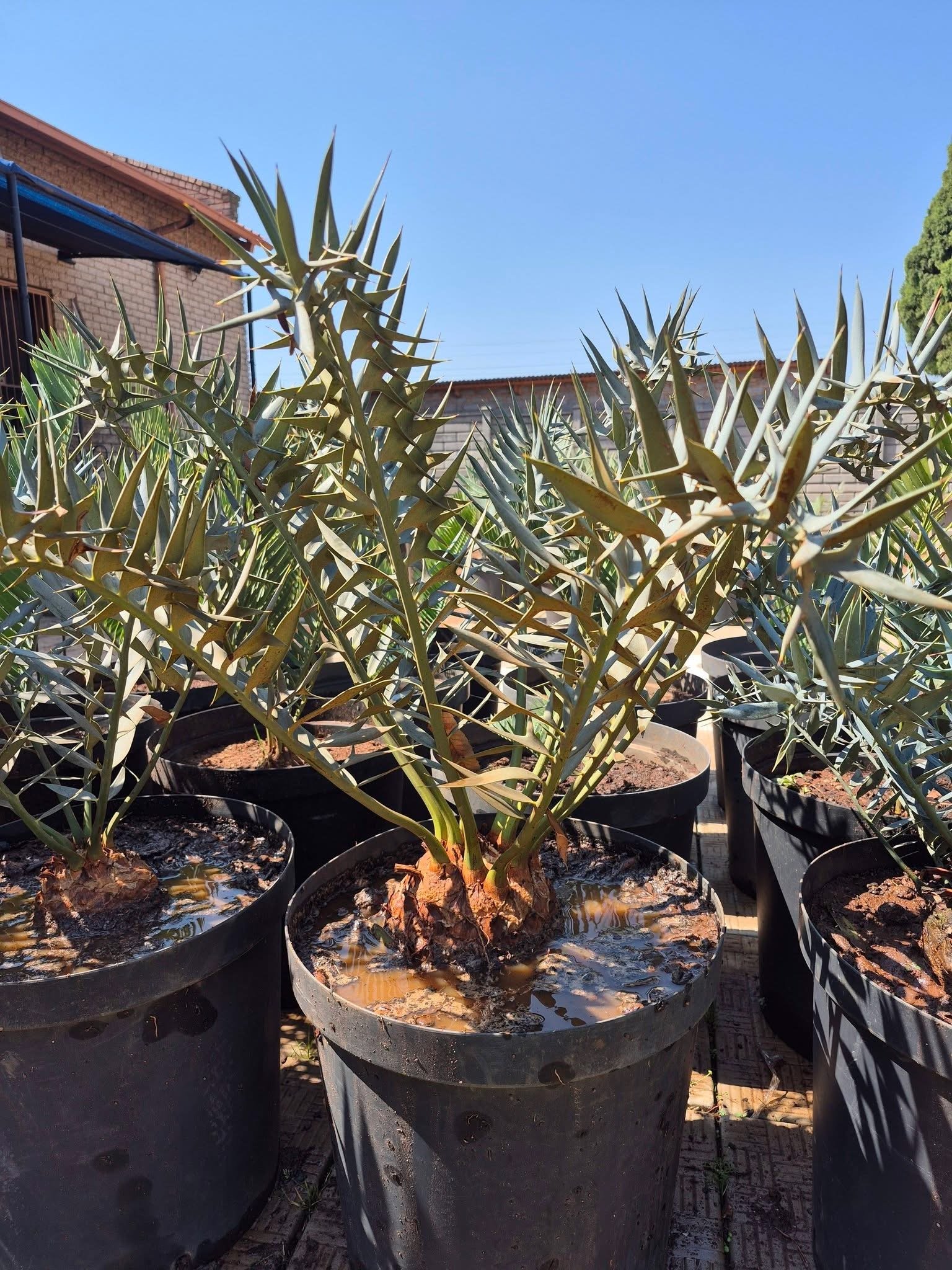
Encephalartos horridus (commonly called the Eastern Cape Blue Cycad) is one of the most popular and recognizable ornamental cycads, prized for its intensely blue, spiky foliage.
Origin & habitat
- Native to the Eastern Cape province of South Africa, growing on dry, rocky slopes and scrubland.
- Despite heavy collection pressure over the decades, it’s somewhat more available in cultivation than many other Encephalartos species (though wild populations remain threatened and it’s still CITES-protected).
Appearance
- The standout feature is its striking blue-grey to silvery-blue leaves — among the bluest of all cycads, which is a big part of its horticultural appeal.
- Leaves are strongly recurved (curving backward/downward) and twisted, with rigid, sharply pointed leaflets — the species name “horridus” (Latin for “bristly/horrid”) refers to this spiny, fierce texture.
- Typically low-growing with a short, often subterranean or partially buried trunk, forming a low rosette of leaves close to the ground — though older specimens can develop a visible trunk over time.
- Slow-growing, like all cycads.
Care basics
- Light: Full sun — intense light helps bring out and maintain the vivid blue coloration.
- Water: Very drought-tolerant once established; prefers to dry out between waterings. Good drainage is essential.
- Soil: Gritty, fast-draining mix (sandy/rocky loam mimics native habitat).
- Temperature: Tolerates heat and some drought well; hardy to light frost once mature, but best protected when young.
- Growth rate: Very slow — a mature specimen represents many years (often decades) of growth.
Collector notes
- Blue intensity can vary between individual plants/seed batches — some nurseries select and label particularly blue seedlings (similar to the “True Blue” designation you asked about with E. arenarius).
- Because of its popularity, hybridization with other Encephalartos species sometimes occurs in cultivation — if you want pure species genetics, sourcing from a reputable specialist grower with documented seed provenance matters.
- As with other Encephalartos, ensure any specimen has proper CITES/legal documentation, since wild poaching remains a serious conservation issue for the genus.


Reviews
There are no reviews yet.