
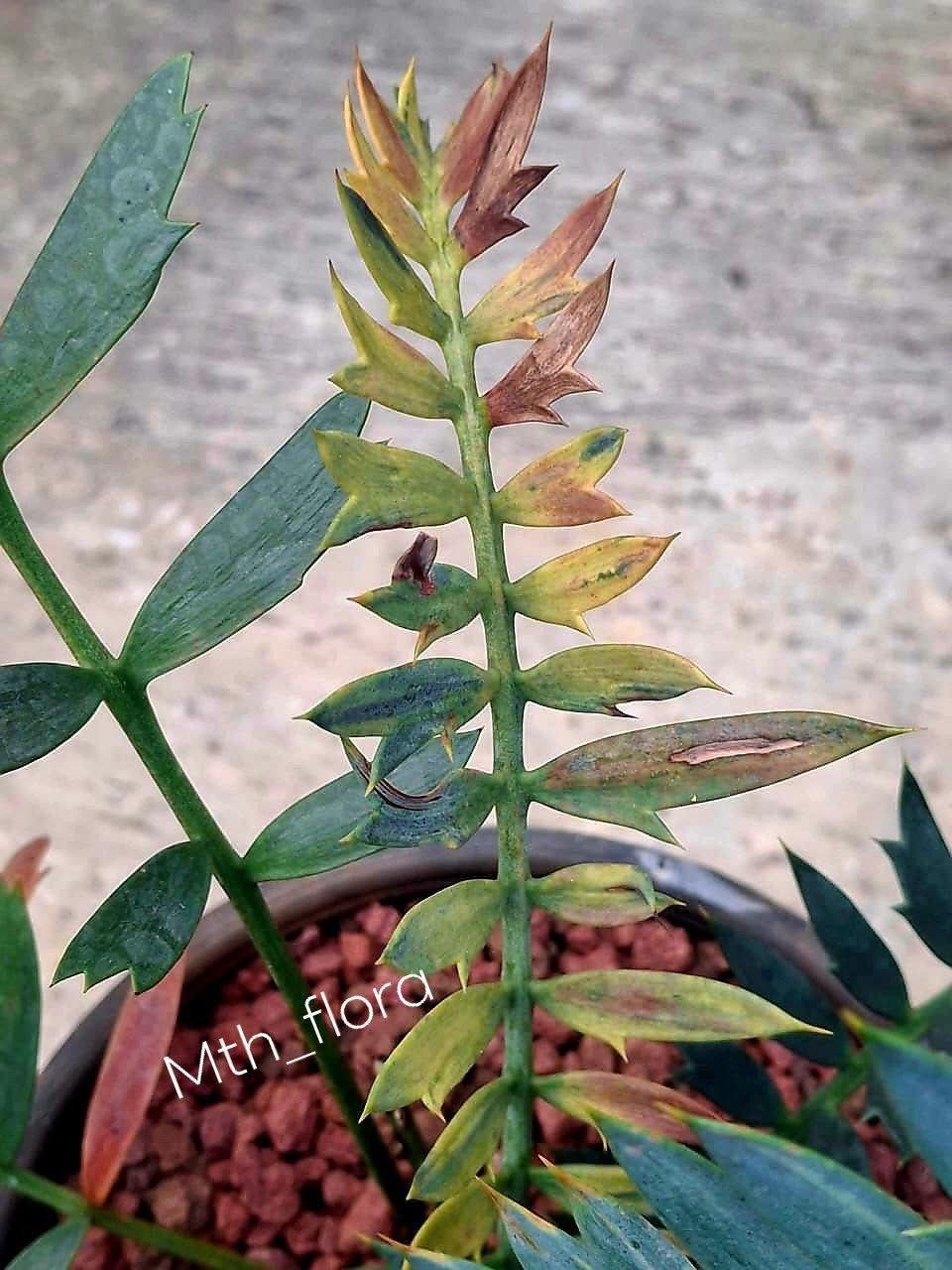
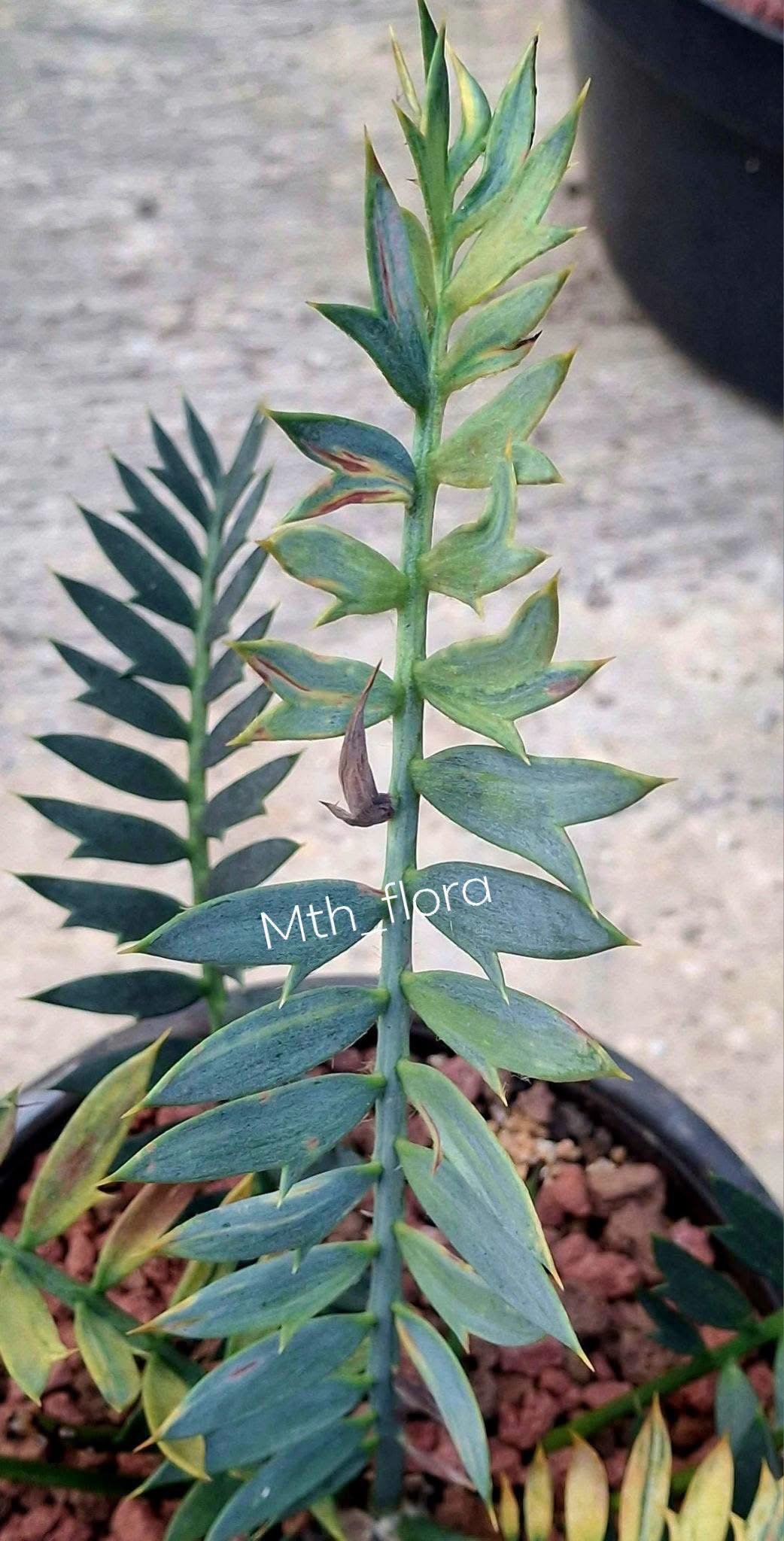
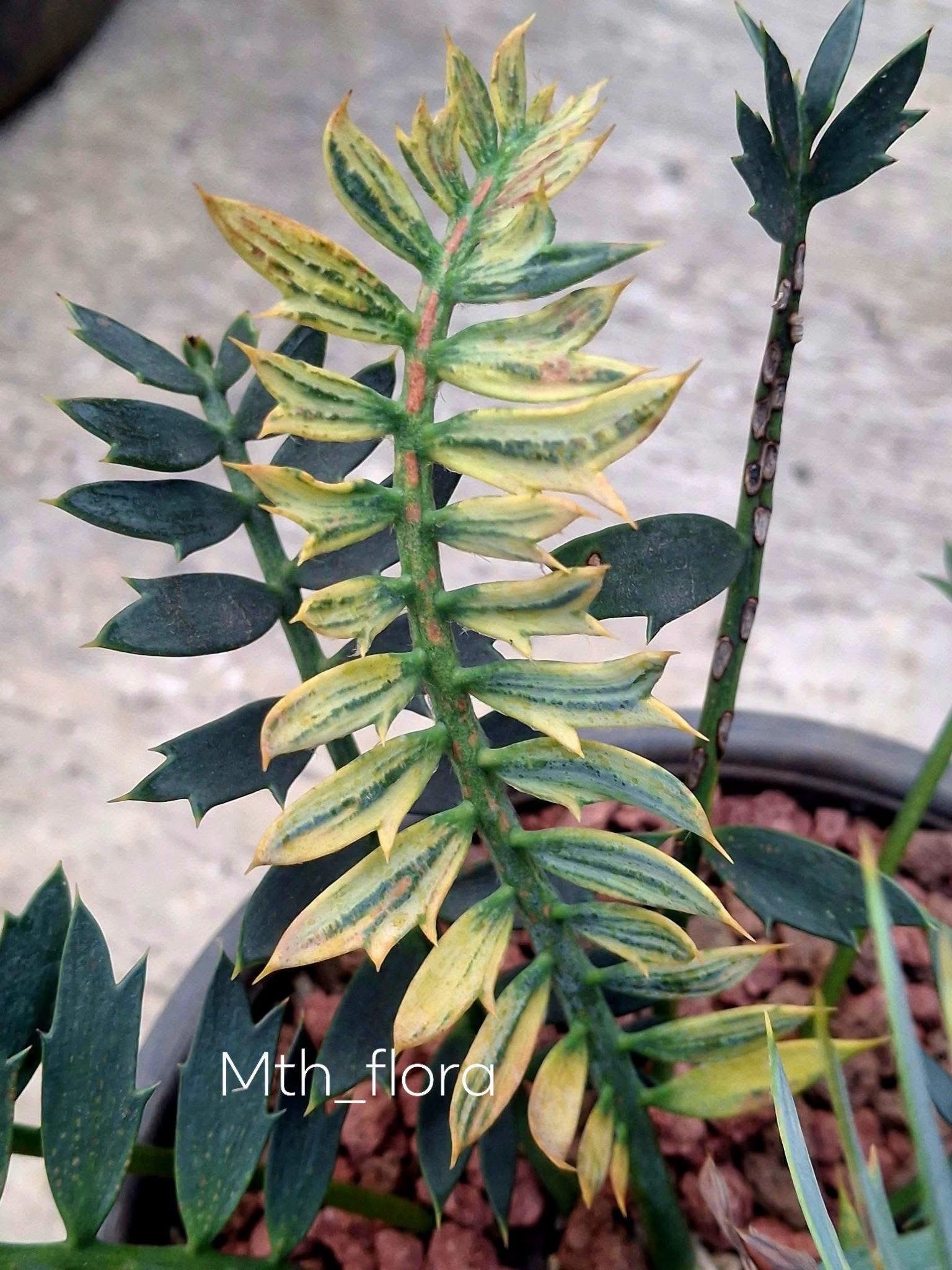
Encephalartos Arenarius True Blue Variegated
Encephalartos arenarius is a South African cycad species, and “True Blue” typically refers to a particularly striking blue-leaved form/selection of this species prized by collectors.
About the species
- Native to the southern and eastern Cape coastal regions of South Africa, where it grows in coastal dune/sandy habitats (the name arenarius means “of sand”).
- It’s a relatively small, often suckering cycad — typically forms a short, mostly subterranean or low above-ground trunk, with plants often growing in clumps.
- Leaves are pinnate (feather-like), moderately stiff, and can range from green to a striking blue-grey/silvery-blue color depending on the individual plant and growing conditions.
“True Blue” form
- This name is used by growers/nurseries to denote seedlings or specimens selected for intensely blue foliage — a more saturated, silvery-blue coloration compared to typical green or blue-green forms of the species.
- Blue coloration in cycads generally comes from a waxy bloom (epicuticular wax) on the leaf surface, which can be enhanced by strong light exposure.
- These are often sought after in cycad collector circles and can command a premium price compared to standard green forms.
Care basics
- Light: Full sun to bright light — strong sun tends to intensify the blue coloration.
- Water: Drought-tolerant once established; prefers well-draining, sandy soil (reflecting its coastal dune origin). Avoid waterlogging.
- Soil: Sandy, gritty, fast-draining mix.
- Temperature: Reasonably hardy for a cycad, tolerating mild frost once mature, though young plants are more tender.
- Growth rate: Slow, typical of cycads.
- Conservation status: Like most Encephalartos species, it’s under conservation concern in the wild due to habitat loss and illegal collection — worth sourcing only from reputable, legal/cultivated stock (CITES documentation matters for cycads).

Reviews
There are no reviews yet.