
Encephalartos ferox: The Fierce and Fascinating Cycad from Southern Africa
Encephalartos ferox is one of the most striking cycads native to the coastal regions of southern Africa, particularly Mozambique and South Africa. Known for its robust, spiny leaves and impressive stature, E. ferox has earned the nickname “fierce cycad” for its uniquely armed foliage and prehistoric appearance. This plant combines rugged beauty with adaptability, making it a highly prized specimen among cycad enthusiasts, landscape architects, and gardeners seeking a dramatic, exotic addition to tropical or subtropical gardens.
Native Habitat and Distribution
Encephalartos ferox thrives naturally along the southeastern coast of Africa, where it inhabits coastal dunes, sandy forest margins, dune scrublands, and woodland grasslands. Its range extends primarily through southern Mozambique and northern KwaZulu-Natal in South Africa, environments characterized by well-drained sandy soils, humid summers with rainfall ranging from 1000 mm to 1250 mm annually, and mild, frost-free winters.
The coastal proximity exposes E. ferox to salt spray, strong winds, and nutrient-poor soils. This challenging habitat has driven the evolution of several remarkable adaptations, such as its leathery, spiny leaves that reduce water loss and deter herbivory, and its ability to form symbiotic associations with nitrogen-fixing bacteria in the roots. These symbioses enable it to thrive in the impoverished sandy substrates where many other plants struggle.
Distinctive Physical Characteristics
E. ferox is easily recognizable by its stout, robust trunk which is often subterranean or partially buried in sand, though older plants may have upright stems reaching up to 3 meters. The trunk is encased in persistent leaf bases that form a rough armor providing protection against herbivores and environmental damage.
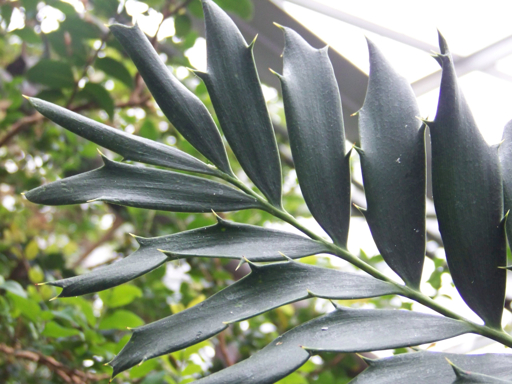
Its most defining feature is the crown of pinnate, deeply spiny leaves that can reach lengths up to two meters or more. These leaves have a glossy dark green to bronze tint and bear wide leaflets with sharply pointed, spine-tipped lobes arranged at about 70 degrees on each side of the leaf rachis. The leathery texture of the leaves helps minimize moisture loss in the hot coastal climate. These formidable spines give the plant its common name “ferox,” meaning fierce, as the leaf margins are heavily armored and must be handled carefully.
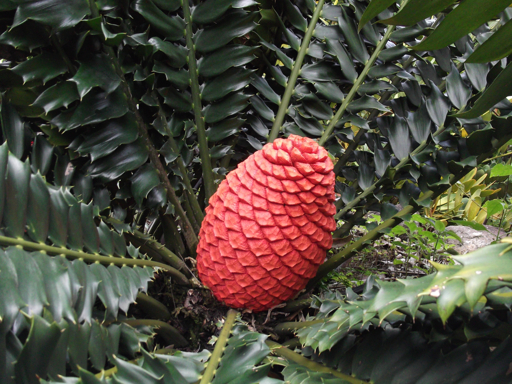
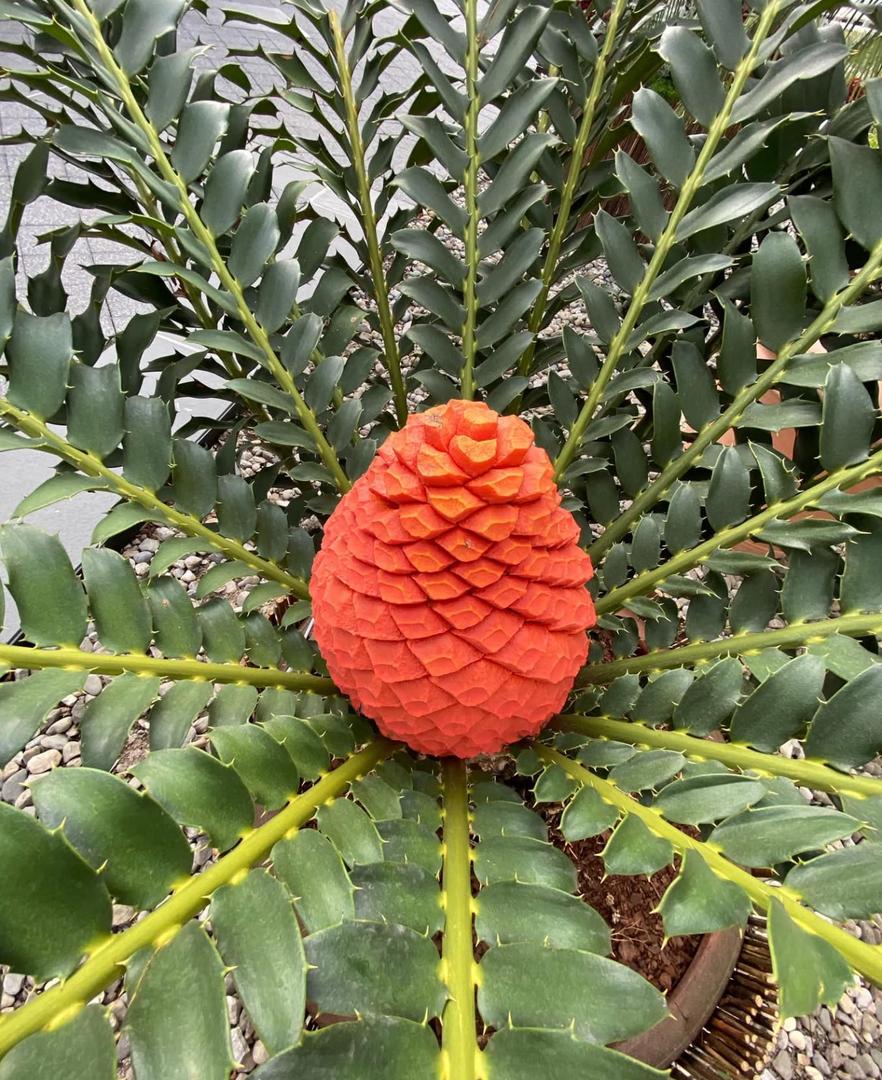
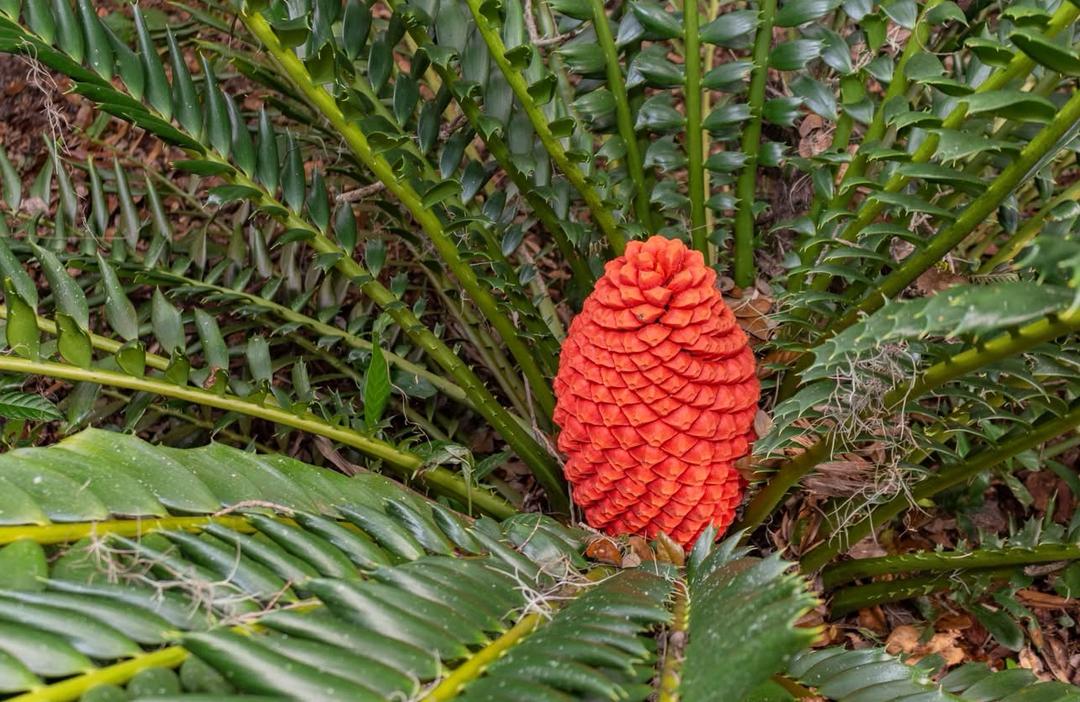
Male and female cones are produced on separate plants, typical of cycads. Male cones are cylindrical and attached near the stem, while female cones are typically ovoid and located closer to the base of the plant. The cones are famously bright red or orange-red, providing a stunning contrast against the dark foliage and making E. ferox a showy presence, especially when in cone.
Cultivation and Care
Encephalartos ferox is popular worldwide in cultivation due to its impressive appearance and relative hardiness compared to other cycads. It performs best in tropical and subtropical climates where temperatures are warm and frost is minimal or absent. Though it tolerates some partial shade, it thrives in areas receiving ample sunlight, which enhances leaf coloration and growth vigor.
Ideal Soil and Watering
This cycad requires well-drained, sandy or gritty soil that mimics its naturally loose dune habitat. Good drainage is crucial to prevent root rot and fungal issues, especially since E. ferox prefers consistent moisture but is intolerant of waterlogged conditions. Deep sandy soils with organic matter provide an optimal growing medium. Regular watering is necessary, particularly during hot summer months, but watering should be moderated in cooler seasons to avoid soggy roots.
Temperature and Light
E. ferox enjoys warm conditions with protection from severe frost, which can be fatal. It flourishes in hot, humid summers and milder winters typical of its native coastal range. While it can tolerate some shade, plants grown with at least 3-4 hours of direct sunlight daily often display better leaf color and more robust growth. However, some protection from the hottest midday sun can prevent leaf scorch in extremely hot climates.Encephalartos ferox
Fertilizing and Growth
As one of the fastest-growing cycads, E. ferox benefits from regular fertilization. A balanced fertilizer with nitrogen, phosphorus, potassium, and essential micronutrients applied seasonally promotes healthy leaf and cone development. Organic compost or manure incorporated into the soil can also enhance nutrient availability. Under ideal conditions, plants can start producing cones within 10-12 years from seed, a relatively quick maturation for cycads.Encephalartos ferox
Propagation Methods
Propagation is typically managed through seeds or by removing offsets (suckers).
-
Seed Propagation: Seeds require hand-pollination in cultivation for reliable results. Pollen collected from male cones is applied when female cones are receptive. Seeds are sown in a warm (25-28°C), well-drained medium and can take several months to germinate. Seedlings grow slowly initially and benefit from stable moisture and indirect sunlight.
-
Offsets/Suckers: Mature plants often produce basal suckers that can be separated cautiously with some roots attached. After a drying-out period to heal wounds, suckers are planted in sterile sandy soil and watered sparingly until root establishment.Encephalartos ferox
Pests, Diseases, and Conservation Concerns
While hardy, E. ferox is susceptible to pests such as scale insects, mealybugs, and mites which can be managed by insecticidal treatments. Cycad-specific pests like snout beetles can damage cones and seeds, requiring attentive control measures.
In the wild, habitat loss due to coastal development and overcollection pose ongoing threats. Although still relatively common in protected reserves, conservation measures include regulated trade under CITES, propagation programs, and habitat preservation to ensure its survival in natural ecosystems.Encephalartos ferox
Landscaping Uses
E. ferox is widely used as a landscape specimen for its dramatic foliage and architectural form. Its intensely spiny leaves add texture and interest to tropical, desert, or xeriscape gardens. Groupings of several plants emphasize their prehistoric appearance, while single plants serve well as focal points or in container gardens.
The vibrant cones enhance its ornamental appeal during the reproductive season. Its tolerance of coastal conditions, including salt spray and wind, makes it suitable for seaside gardens. Companion planting with other drought-tolerant species such as aloes and agaves highlights its rugged, exotic charm.Encephalartos ferox
Reviews
There are no reviews yet.